


The 12 archetype wheel for content marketing
- Eliezer J Sherman

- Aug 24, 2021
- 2 min read
Who's Carl Jung and what's his animus?
One of my passions is finding inspiration and then sharing it. Recently I stumbled on a concept by one of my favorite writers, 20th-century Swiss psychiatrist, Carl Jung, and applied it to a marketing context. The concept by Jung (YUUN-g) concerns 12 archetypes, or basic characters, which reside together in humanity's collective unconscious. I say "humanity's" because perhaps dogs have their own.

Anyway, these 12 characters represent motifs such as the ruler, the jester, and your average Jane, and have been used by writers, artists, propagandists, journalists, prophets, and even psychologists, both intentionally and spontaneously, in the pursuit of their goals for thousands of years. Marketers should be no less privileged.
The archetypes are are:

The caregiver
The elite
The hero
The dreamer
The guru
The explorer
The rebel
The magician
The creator
The lover
The entertainer
The citizen
How can content marketers use the 12 archetypes?
Chances are, your company or clients embody one or more of the archetypes themselves. Margaret Mark and Carol S. Pearson -- in their book The Hero and the Outlaw, Building Extraordinary Brands through the Power of Archetypes -- argue that brands come to signify the archetypes through the needs they satisfy.
Those needs in turn are the source of inspiration.
The archetype wheel defined by brands
The image below shows the 12 archetypes around a circle like the spokes on a wheel. The 12 archetypes can either be further broken down into three subgroups or four cardinal directions. The three subgroups are self, ego, and soul, while the four directions are connection, stability, freedom, and innovation.
Around the wheel are brands I thought exemplified the archetypes.

Mark and Pearson's The Hero and the Outlaw
To make Mark and Pearson's main argument work, you have to believe that certain brands have achieved enormous success in large part because they satisfy archetypal urges within us all. This means that the brand's identity is itself based on the archetypal human need its products, services, or solutions satisfy.
The existential beauty here, of course, is that the archetypes, the brands, etc., symbolize humanity's innate desire to find meaning in everyday activities even as banal as straightening up or driving. And that's where the brand and its story, its imagery and the user experience it provides, come into alignment -- along the satisfaction of a base archetypal desire.
Read more from Elie Sherman:
How do archetypes help me develop new products?
The Jungian archetypes can help product managers during new product development, especially while discovering and defining needs and touchpoints.
And if you're struggling to identify your consumer base, it can be helpful to think about which archetypal needs you're satisfying. That way, you're not trying to figure out who you're attracting, but which needs your products or services fulfill.
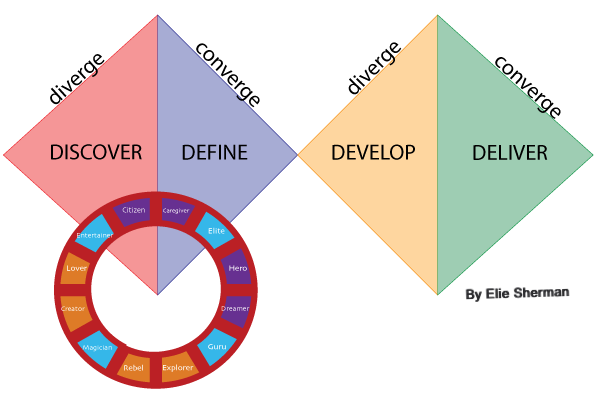
If you're interested in learning more about the 12 archetypes, here's a link to a useful blog:


Comments